When Images Become Infinite, Reality Becomes Scarce
By Peter Koloff
August 27, 2026
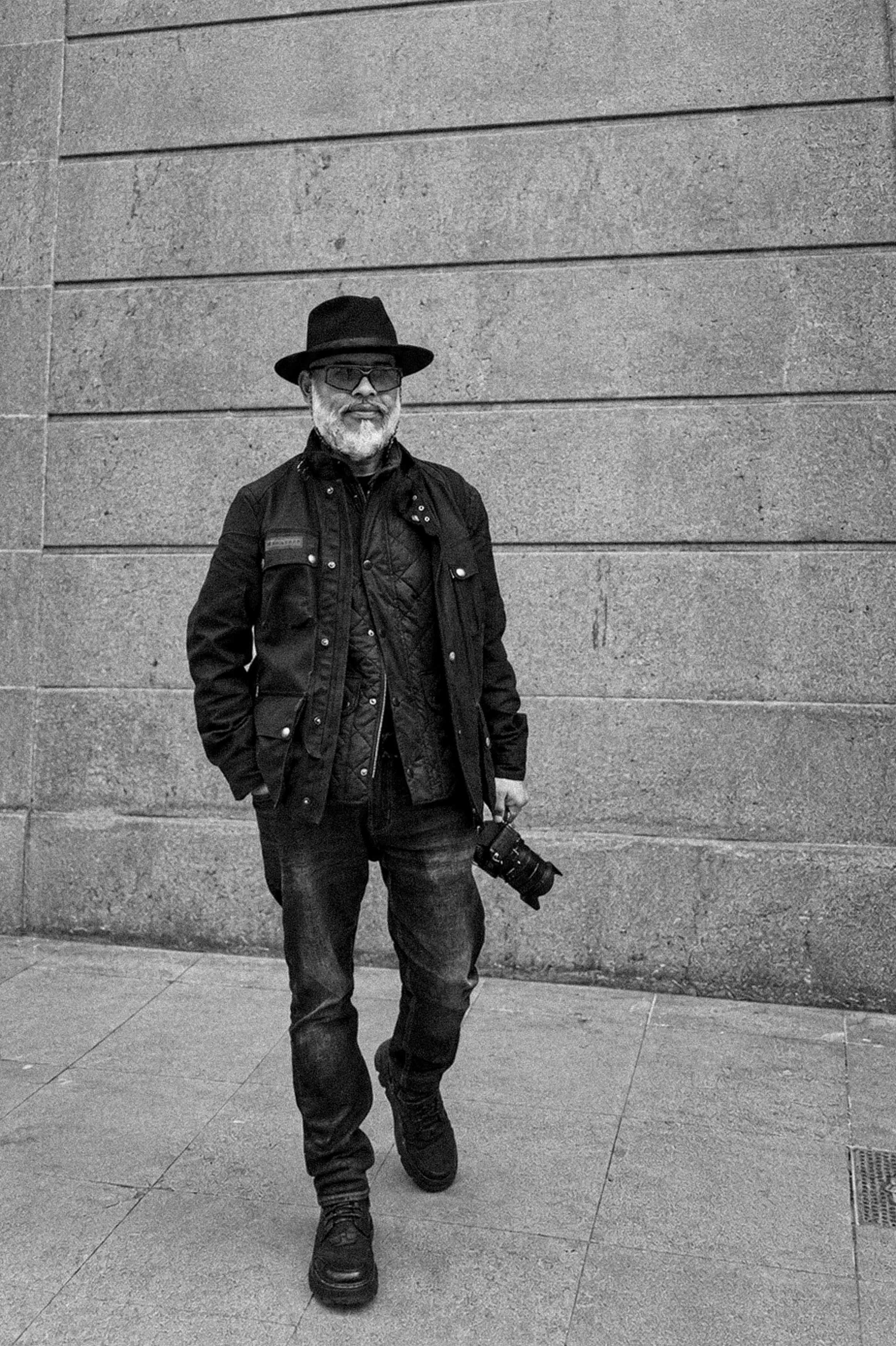
For most of photography's history, creating a convincing professional image required access to scarce resources. A photographer needed technical knowledge. A commercial production might require a model, a location, lighting, assistants, retouching, transportation and time. Even relatively simple images carried real production costs because someone had to physically create the conditions necessary for the photograph to exist.
Generative artificial intelligence is dismantling that equation. A fictional model can now be placed inside a fictional penthouse overlooking Paris. Lighting can be simulated. Wardrobes can be changed. Locations can be invented. Backgrounds can be extended. Entire advertising campaigns can increasingly be produced without a camera ever entering the room.
The quality will continue to improve, and eventually technically competent image making may become almost infinitely abundant.
That raises a more interesting question than whether AI will replace photographers.
What happens to the value of a photographer when making the image itself is no longer difficult?
The Part of Photography AI Will Replace
There is little reason to romanticize what is happening. Artificial intelligence will almost certainly eliminate some photography jobs, and the most exposed work is the kind where the client does not particularly care whether the scene ever existed.
Consider a company that needs an attractive image of a woman drinking coffee on a terrace in Paris. Historically, creating that photograph might involve hiring a photographer, model, stylist, makeup artist, producer, retoucher, location and perhaps an entire travel budget.
But what does the company actually need? Not necessarily a photograph. It needs an image that communicates an idea.
Once a machine can produce that image convincingly, the economics change dramatically.
Stock photography, conceptual advertising, generic lifestyle imagery, some product photography, inexpensive fashion work and routine social media content are particularly exposed because much of that market exists only because convincing imagery has historically been expensive and technically complicated.
AI removes much of that scarcity. And when scarcity disappears, it becomes increasingly difficult to justify the same premium.
But Not Every Photograph Is Just an Image
Now consider a completely different kind of assignment. Photograph the Met Gala. Document a wedding. Follow a political candidate through an election. Spend several days inside the home of a prominent family. Photograph backstage during Fashion Week. Enter a private studio while an artist works. Document a protest, a war, a championship, a funeral or a cultural event that will never happen in exactly the same way again.
Artificial intelligence can generate imagery that resembles those situations. What it cannot do is retroactively attend them.
That distinction may become one of the defining ideas of photography in the AI era. There is a fundamental difference between an image depicting an event and a photograph documenting one.
The first is visual production. The second is evidence of presence.
As synthetic imagery becomes more convincing, presence may become more valuable, not less.
The Photographer as Witness
Photography has always existed somewhere between art and evidence. A photograph is never automatically truthful. Photographers choose where to stand, what to leave out, when to release the shutter and how an image is edited.
But traditional photography begins with a constraint that generative AI removes entirely. Something had to be in front of the camera.
Imagine two visually identical pictures of an important historical event. One was generated yesterday. The other was made by someone standing ten feet away when it happened.
The pixels may eventually become indistinguishable, but the objects themselves are not. One is an image. The other is a document.
Its significance comes partly from the fact that a human being occupied a particular place at a particular moment and decided that moment was worth recording.
In an era of unlimited synthetic imagery, the chain connecting photographer, camera, subject and moment may acquire new importance.
The infrastructure for that distinction is already beginning to form.The Coalition for Content Provenance and Authenticity, known as C2PA, maintains an open technical standard for Content Credentials that can record information about the origin and editing history of digital media.
Adobe and other technology companies have also incorporated Content Credentials and related provenance technology into parts of their creative ecosystems.
The larger pattern is important.
As the image becomes easier to manufacture, the history of the image becomes more important.
Who made it? How was it made? Was there a camera? Was there a subject? Was the photographer actually there?
Photography May Divide Into Two Economies
The photography market may increasingly separate into two broad economies.
On one side is synthetic visual production. It is fast, inexpensive, scalable and increasingly sophisticated. A company may eventually generate hundreds of advertising concepts before lunch.
Models are never late. Locations are never unavailable. The weather always cooperates. Production costs fall dramatically.
On the other side is photography whose value comes precisely from the fact that it cannot simply be generated. Private events. Journalism. Documentary work. Celebrity access. Weddings. Political coverage. Luxury clientele. Historical archives. Major cultural events. Personal portraiture. Behind the scenes documentation.
The economics of these two categories may move in opposite directions.
Synthetic images become cheaper because supply can become effectively unlimited. Authentic access may become more valuable because it remains scarce.
Between the two will exist an enormous hybrid market where photographers use artificial intelligence as part of the creative process.
That matters. The photographer of the future is not necessarily someone who rejects AI.
Some of the strongest photographers may become sophisticated users of it. They may use artificial intelligence for retouching, production planning, image selection, background modification, research, color work, editing and entirely new forms of visual experimentation.
The meaningful distinction will not always be human versus machine. It will increasingly be between situations where reality matters and situations where it does not.
Technical Excellence Is No Longer Enough
This transition creates an uncomfortable problem for photographers. For decades, technical expertise itself carried economic value.
Photographers knew how to expose film correctly. They understood lighting ratios. They understood color. They owned expensive equipment. They mastered Photoshop. They understood lenses, studios and complicated production workflows.
Those abilities still matter. But their scarcity value is declining.
Modern cameras already make technically excellent photography easier than it has ever been, and artificial intelligence will accelerate that trend dramatically.
Someone with relatively little technical training will increasingly be able to produce an image that looks professionally lit, professionally retouched and professionally composed.
Technical competence alone therefore becomes a weaker competitive advantage.
The photographer's value has to migrate somewhere more difficult to automate.
I believe it migrates toward judgment.
The New Competitive Advantage Is Access
Suppose there are two photographers. The first is technically extraordinary. The second is technically very good but has spent twenty years building relationships with artists, designers, publicists, actors, collectors, executives, editors and private families.
In an AI world, I would bet on the second.
Artificial intelligence can imitate lighting. It can imitate lenses. It can simulate film grain. It can recreate entire photographic styles. It can produce a beautiful portrait of someone who never existed.
But it cannot receive an invitation to a private dinner. It cannot build a ten year relationship with a family. It cannot persuade an artist to allow a camera into a studio during a difficult or intimate moment. It cannot gain backstage access because the people involved trust it.
And it cannot walk through a city, notice someone extraordinary across a room and begin a relationship that eventually develops into an important body of work.
That suggests something photographers need to understand quickly.
Access is becoming a form of professional capital.
The relationships surrounding a photograph may eventually become almost as valuable as the photograph itself.
The Photographer's Real Product May Become Trust
Luxury clients already understand this intuitively. When someone allows a photographer into a private home, a wedding, a hotel suite, a dressing room or a family event, technical skill is only part of the decision.
The photographer is being trusted. Trusted not to embarrass the subject. Trusted to understand when not to photograph. Trusted with private information. Trusted with proximity. Trusted to recognize the difference between something intimate and something publishable.
Artificial intelligence does not remove the value of that trust. If anything, the flood of synthetic media may increase it.
The photographer becomes more than the person operating the camera. The photographer becomes a witness whose presence has been permitted.
The Collapse of the Middle
There is a tempting way to make this argument reassuring. It would be easy to say that AI will simply make authentic photography more valuable and photographers will ultimately benefit.
I do not think it will be that simple.
Authentic photography can become more valuable while the total number of photographers earning a sustainable living declines. Those two outcomes are perfectly compatible.
Routine commercial production could shrink significantly as businesses generate acceptable imagery internally and smaller clients decide that good enough artificial intelligence is preferable to paying for a professional shoot.
The result could be a market increasingly polarized between inexpensive synthetic content and premium human work.
The middle may face the greatest pressure.
This pattern has appeared repeatedly when technology democratizes production. The lower end becomes automated. The highest end differentiates itself through reputation, scarcity, relationships and prestige. The middle struggles to explain why it costs what it costs.
Photography may be heading directly toward that environment.
The Photographer Becomes Something Else
If that happens, the traditional definition of a photographer becomes increasingly inadequate.
The photographer of the future may be part image maker, part director, part journalist, part archivist, part technologist and part relationship builder. The camera still matters, but operating it may become one of the least differentiated parts of the profession.
The true skill becomes recognizing significance. What deserves to be photographed? Who deserves attention? Where should you be standing? Which relationship should you develop? Which moment matters? What should remain private? Which image will become more meaningful ten years from now than it appears today?
These are not primarily technical questions. They are questions of judgment. And judgment remains difficult to automate.
The Archive May Become More Valuable Than We Realize
There is another possibility photographers should consider.
The explosion of synthetic imagery could sharply increase the historical value of authentic photographic archives.
Imagine looking back at the years between 2025 and 2040 from the perspective of someone living in 2070. Billions of synthetic images may exist depicting that era.
But relatively few may carry a trustworthy chain connecting them to something that actually occurred.
Who was really in the room? What did the street actually look like? What were people genuinely wearing? What did a neighborhood look like before redevelopment? Who attended the party? What happened backstage? What did a famous artist's studio actually look like? What did ordinary life look like before so much of visual culture could be reconstructed?
The photographers documenting those things today may be creating something more important than content.
They may be building historical evidence.
Content provenance systems such as C2PA demonstrate how quickly authenticity and origin are becoming concerns across the technology and media industries.
The technology will continue evolving. But the underlying cultural problem will not disappear.
We will increasingly need ways to distinguish between what could have happened and what actually did.
When Images Become Infinite
Artificial intelligence will become extraordinarily good at making pictures.
Photographers should assume that. Fighting that technological reality is not a strategy.
The better question is what remains scarce once image creation itself becomes abundant.
Access remains scarce. Trust remains scarce. Taste remains scarce. Cultural understanding remains scarce. Historical moments remain scarce. Human relationships remain scarce. Being physically present at something that happens only once remains scarce.
And perhaps most importantly, reality itself remains scarce.
The photographer who understands this transition stops treating the camera as the product. The camera is the instrument.
The photographer's real value is being there, understanding what is happening, being trusted enough to witness it and having the judgment to recognize the fraction of a second worth preserving.
In an age capable of generating an infinite number of images of things that never happened, the most valuable photograph may ultimately be the one for which someone can still say:
I was there. This was real.